
When memories meet practical decisions
Losing someone is difficult enough. Then comes the work of opening cupboards, sorting papers and deciding what should happen to household possessions. A familiar coat, a favourite chair or an old recipe book may carry memories that are hard to put into words.
Sometimes there is pressure to prepare a property for sale, return keys or manage a house that is far away. Family members may have different ideas, and it can be exhausting to make so many decisions while grieving.
You can be thoughtful without keeping everything. The goal is to respect the person and the people involved while choosing sensible options for items that no longer have a place in the home.
2. Make a plan that suits the situation
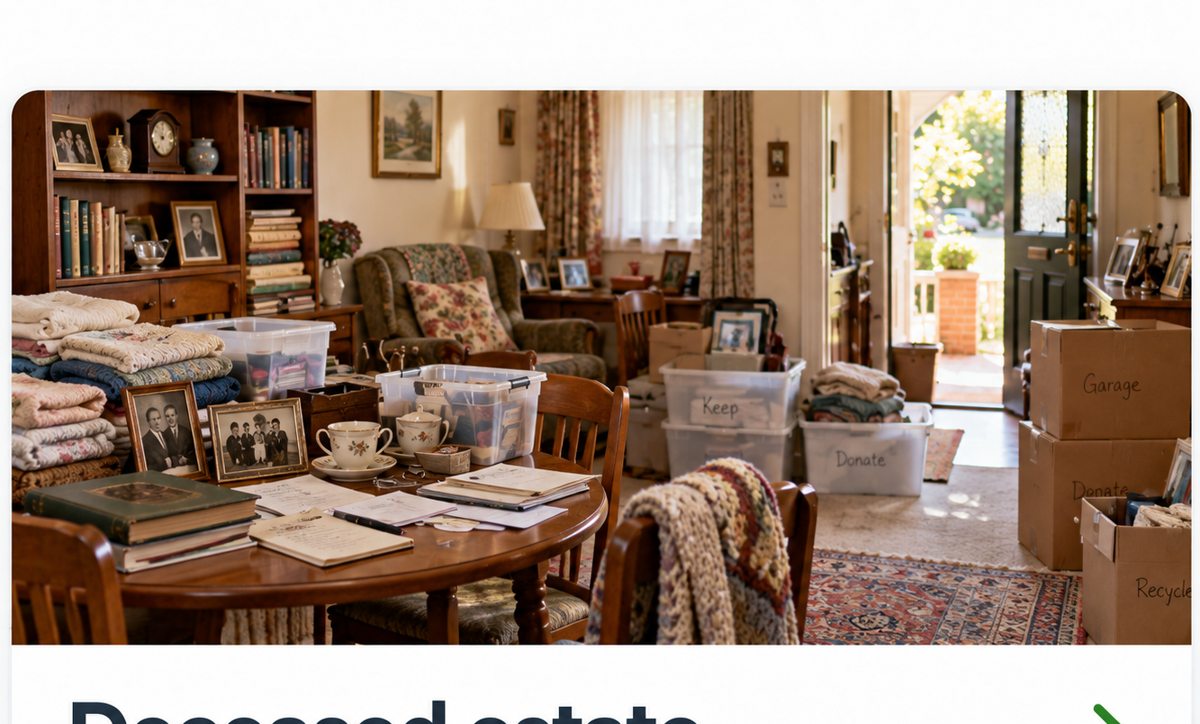
Before emptying rooms, clarify the deadlines, who is helping and whether a written inventory is needed. Take photographs where appropriate and use one room at a time to avoid losing track.
A simple method is to label areas or boxes: Keep · Investigate · Sell · Donate · Repair or reuse · Recycle · Disposal. These are planning categories, not permission to dispose of estate property.
- Begin with practical rooms such as the laundry, pantry or garage if that feels easier.
- Put photographs, letters, collections and uncertain valuables aside.
- Do not pressure family members to decide on sentimental items in a single session.
- Ask for help moving heavy furniture; avoid unsafe lifting and unknown chemicals.
- Record decisions and who authorised them before anything leaves.
3. Look twice before deciding something is rubbish
Older furniture, tools, books, records and collections may be valuable, repairable or useful to someone else. Even when resale isn't worthwhile, a donation or specialist recycler may be able to give an item another life.
Consider a professional valuation if something appears rare, collectable or disputed. And if belongings were jointly owned, gifted before death, or specifically mentioned in the Will, clarify ownership before taking action.
4. Where can the belongings go?
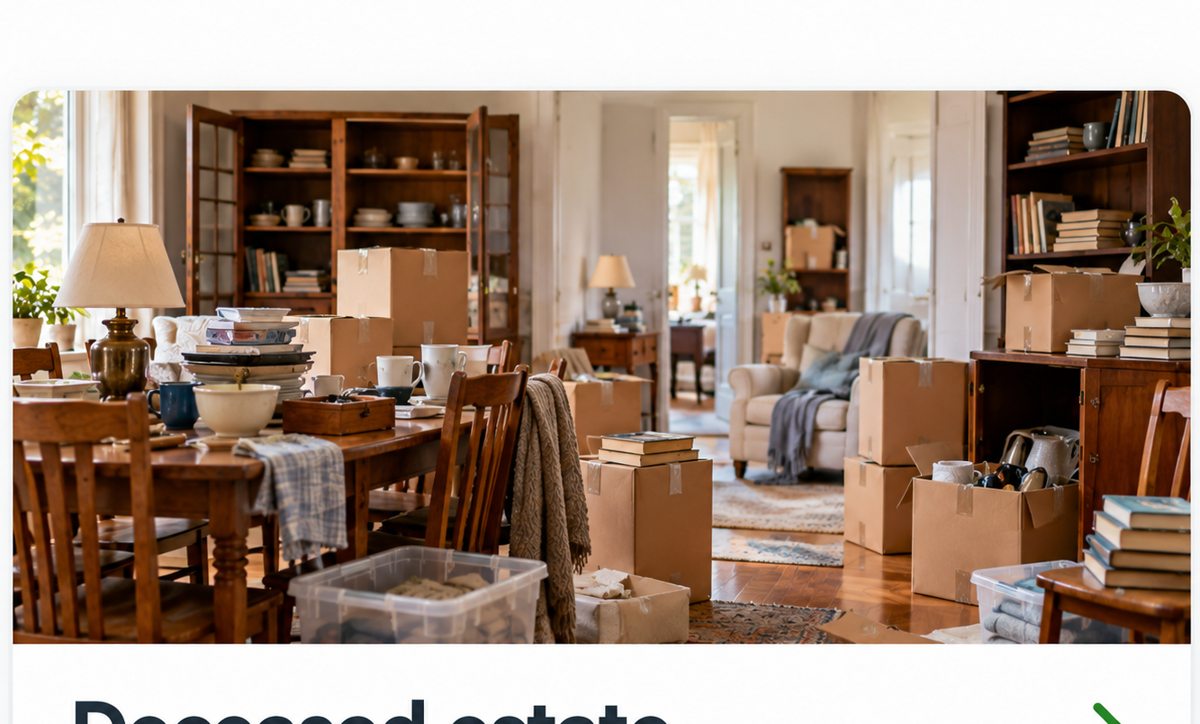
Once decisions are authorised, start with reuse where practical, then specialist recycling. Disposal to landfill should be considered only after suitable options have been checked.
Consider family, second-hand stores, local buyers, repairers or charities that accept the condition and size of the item.
Clean, wearable items may be suitable for donation; damaged textiles need an appropriate reuse or recycling pathway.
Offer to beneficiaries first where appropriate; investigate book dealers, community groups and specialist collectors.
Working appliances may be reusable; non-working ones may be accepted by suitable metal and appliance recyclers.
Ask the local council or transfer station about mattress acceptance, fees and available collection or recycling options.
Keep batteries out of household bins and hard waste. Use approved collection services and check which battery types they take.
Assess resale or donation potential; separate recyclable metal and compare specialist collection or drop-off options.
Do not tip into drains or mix unknown substances. Check approved hazardous-waste facilities and safe handling advice.
Before loading a vehicle, check whether the receiving organisation accepts the items and whether there are fees, limits or preparation requirements.
5. Getting practical help
It is reasonable to ask for help. Depending on the situation, you might contact an estate lawyer or administrator, professional valuer, removalist, donation organisation, auctioneer, property-clearance business or specialist recycler.
When requesting a clearance quote, ask what the service includes, whether reusable items are separated, who pays disposal fees, how valuables are handled and whether receipts or a written inventory can be supplied.
Think Before Landfill is developing a directory to help visitors explore these options, starting in South Australia. A directory listing is not an endorsement or confirmation of legal authority.
Common questions
Can I start sorting before probate is granted?
You may be able to identify, document and protect belongings, but the authority to sell, distribute or dispose of estate property depends on the circumstances. Check with the executor or an estate professional before taking irreversible steps.
What if family members disagree?
Pause disputed decisions, keep an inventory and seek advice from the executor or an appropriate legal professional. Do not assume that an informal family agreement overrides estate obligations.
Should I order a skip bin immediately?
Usually it is better first to establish authority, review belongings and identify what might be kept, sold, donated or recycled. A skip may still be useful later for genuine waste.
What if the house must be cleared quickly?
Confirm the deadline and who can approve clearance. Photograph and inventory contents, protect valuables and important documents, and consider professional help rather than discarding everything without review.
One small step at a time
You do not have to complete every task in a weekend. Some things deserve more time, and some decisions require professional advice. Where possible, give useful belongings another life — while caring for yourself and the people involved.
Before it goes, let's see if there's a better solution.